
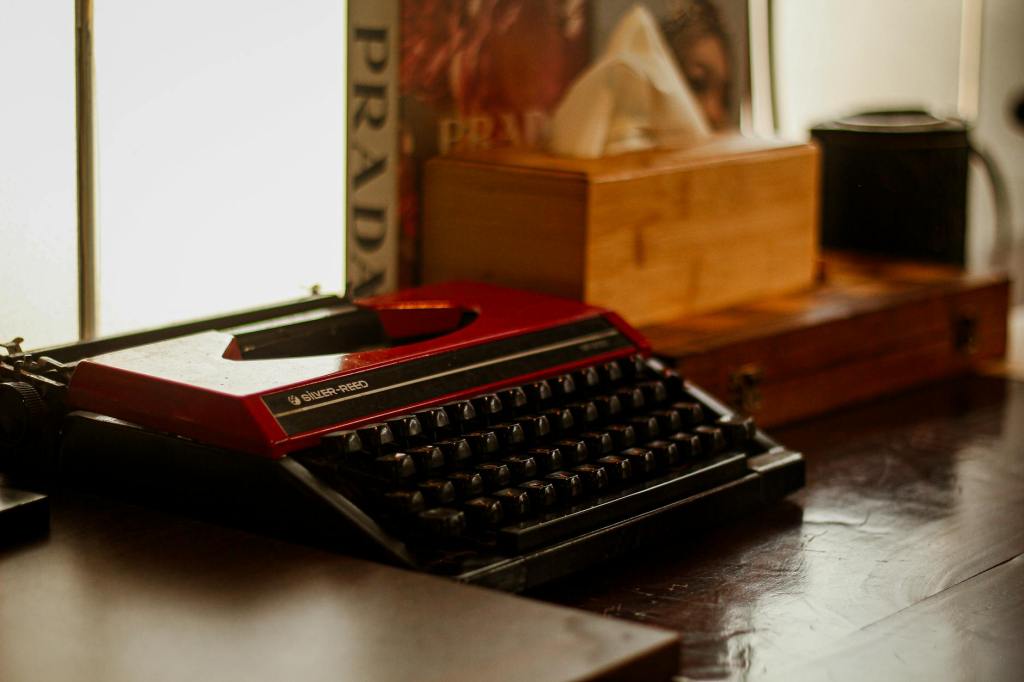
Being a freelancer in the time of Generative AI is truly the most horrifying experience, laced with frustration, desperation, uncertainty and false promises.
I have spent my whole life working on creative writing, on languages, branching out from English to Korean, branching into the world of fascinating linguistics, something so fundamentally human, making it mechanical takes the soul away from it.
I could not study it formally, devoting my time to a difficult situation in my family, and making that decision to focus on building my own business and my own skill had never been easy, and I always knew the time would come when it would put me in disadvantage among people who had the power to perhaps do both or had the chance to study peacefully. But facing potential fears always makes us look at them through pink-tinted glasses. As something abstract, filtered from our minds.
As I was let go by another client just minutes ago, a client that encouraged me to let go of my other work commitments and devote my time to their content, I feel deeply emotional. I was happy to find a false state of stability after the first wave of companies deciding to cut their workers—the old, the new, the devoted, the somewhat present. But it was false hope indeed. But what argument is there to be made? The question of generative AI is simply a moral one.
Do you support human work? Or do you take the soul away from it and the artists themselves by making short-cuts?
At the end of the day. That’s all the arguments I can make from the position I understand.
Seeing my entire career crumble, not because of something I did or didn’t do, but because I was simply replaced by a simple line of code and a prompt reminds me of a tree, once beautiful and majestic, full of hope and life, now marked with red “X” – prepared to make way for road, a house, something someone needs more than something so simple and common as a tree. But just as that tree has a life and purpose, uniqueness and hard work, growing for so long, finding the will to survive seasons, its roots pushing through soil, concrete and modern-day challenges, so did I. So do the other freelancers in the creative field. When I look at us as humans, the one fundamental truth about us is our creativity.
From the moments we could, we let our creativity speak for us.
We left drawings in caves, on canvas, words on stone tablets, papyrus or through digital code. In conflicts, regimes, and injustice, creativity is our last line of defence. Be it slogans against cruel governments, movies with forgotten stories, or protest songs calling for justice.
It doesn’t have to be so heavy. Some things are simple and need to be simple for our lives to make everyday sense. We look towards creativity when we need it. The music that touches our hearts, the books that take us to another (perhaps better) world, the movies that make us laugh, cry or judge profoundly.
All of it is part of our everyday life. For every single person. And yet it has become so simple to disregard those who provide it, who make something human for other humans to feel as a unique shared connection, nothing on this planet has. The one thing that is so human in its core, only humans can destroy it by their ignorance.
Take that away, what are we?
We might become just a forgotten relic on a planet destroyed by the unimaginable amount of resources it takes to keep generative AI running, while your simple prompt destroys countless silent lives you never think of. For some reason, as a collective, society decided not to support the AI that matters, the deep-thinking machinery that could elevate our health care and fight against poverty, energy deficiencies or diseases research from cancer treatments to prevention.
No, the industry (large and small) instead focuses on the technology that destroys enormous parts of who we are, who we should be.
And that’s truly terrifying.
 LITTLE CZECH WALKER
Leave a comment