
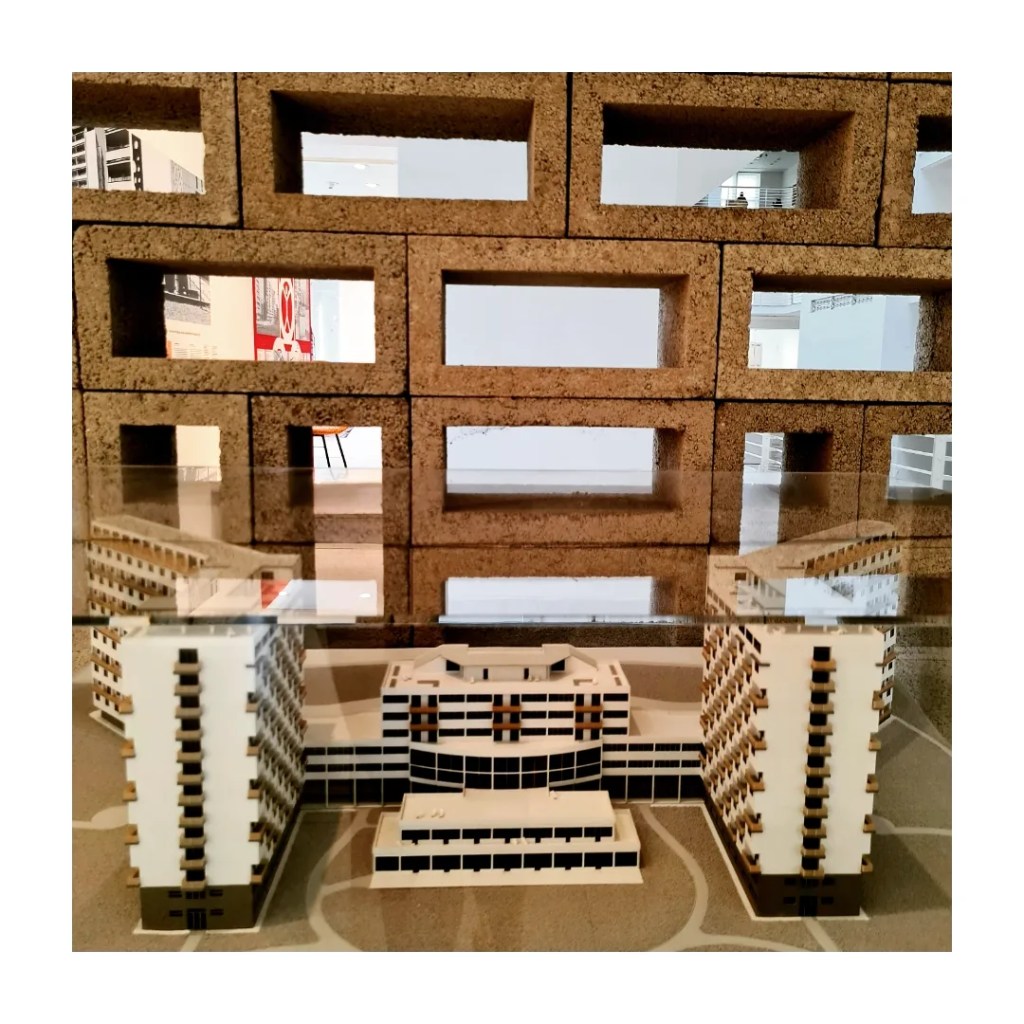
Between 1959 – 1989 the hopes and dreams of the Czech people were slowly crushed until they found hope again. Between Prague Spring, the Warsaw Pack invasion, Normalisation, hard and dark communism and ultimately the Velvet Revolution, architecture in former Czechoslovakia changed its ideas and purposes as vividly as the mood in the country shifted. You can walk through all of that during a short but sweet new National Gallery exhibition that can be found in the Veletržní Palác building.
Political climate of the 50s-90s Czechoslovakia
There is little doubt that the 20th century was full of turmoil wherever in the world you look, and Czechoslovakia had its fill, and it got some extra on top of that. After the event of World World II. when Czech lands were quite literally handed over in an event we ofter refer to as “about us without us” (referring to the events in Munich 1938) comes the very short-lived euphoria with the USA and Russia dividing Eastern Europe into two parts and throwing states in like hot potatoes – which led to the formation of the Soviet Union and totalitarian regime taking over, executing war heroes left and right in political trials.
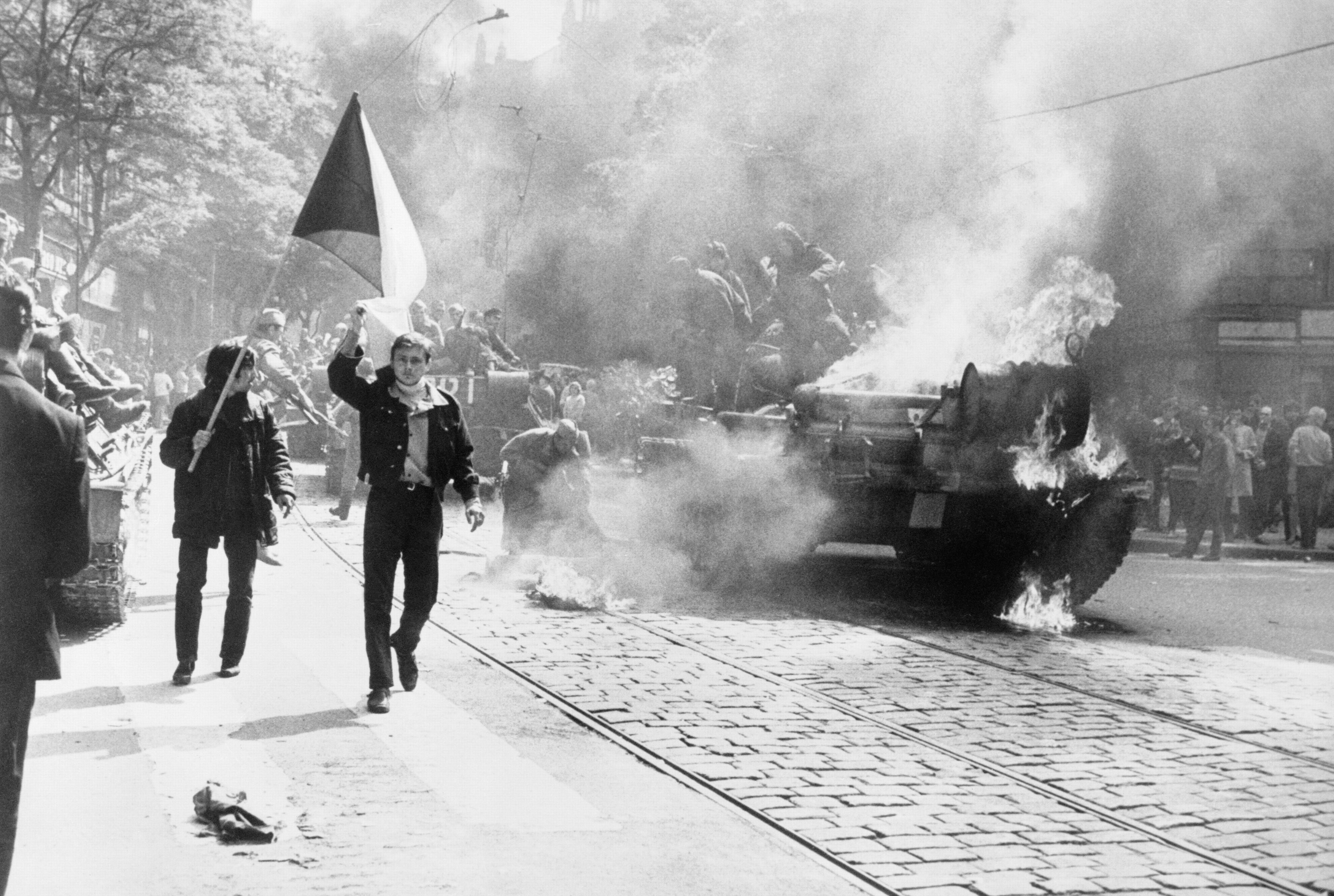
There was one little but hopeful shine of light, something called “Prague Spring”. The events of the Prague Spring took place in 1968, a very short-lived hope of liberation with the newly elected Alexander Dubček. But, unfortunately, what would seem like a free period ended with the invasion of Warsaw Pact members, power and invasion so overwhelming that the Czech military could neither act nor accept the help Romania offered. The last little sign of very bitter hope was the suicide of Jan Palach, who burned himself in political protest at Wenceslas square, which became the symbol of the invasion. In this place, the underground free press was handed out, where students and Czech people were still defiant despite being surrounded by tanks.
A year later, Jan Zajíc did the same, warning against the normalisation of the newly established and alarming political power; he burned himself in Prague. Despite that the regime kept going and during this period, the political arrests continued, including political trials and murders. One particular woman deserves to be mentioned here: Czech lawyer and politician Milada Horáková, who was sentenced to death and killed in the politically constructed trial in 1950. She is one of many who were persecuted.
This particular exhibition exhibits pieces before all of these events took place – it’s first piece being from the 1959. Still, all these events are essential to set and led to the Czechoslovakian architecture to come and the many forms and reasons behind functionalism it represented.
During the 60s – 70s, we talk about a period of Czechoslovakia that was deeply in totality, with little hope of change. The Communist party was centralising many aspects of life, managing it and controlling it deeply – freedom of speech was unthinkable, and all art forms that could in any way speak about life outside of the idea of communism were not only banned but persecuted. This period of Normalisation, which Zajíc tried to warn people against in 1950, lasted until 1989.
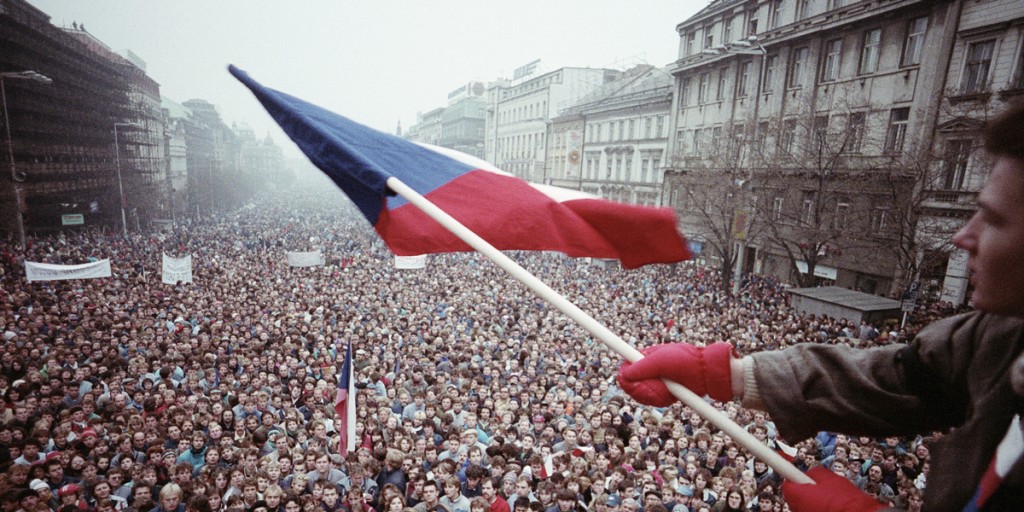
Events of 1989 to this day remain one of the brightest moments in Czech history, whether you would think of Czechs as Monarchy (from the 9th – 19th Century), First and Second republic or as a Czech republic democratic state. It’s a revolution led by people and won by people, with Václav Havel being a pivotal figure who would later become the first Czech democratic president. Velvet Revolution got its name for being the most peaceful change of power in modern and perhaps even ancient world history. While there were clashes with the police on a large scale it was a peaceful revolution, so overwhelming communist party resigned its power.
3 key architecture works from times of deep totality
Despite all this, many achievement were made by the Czech and Slovakian people, be it in the science field or in architecture and art. Here are few notable buildings and projects that were highlighted by the exhibition and that deserve to be highlighted here as well.
Ještěd tower (1973)

What is unique about Rozhledna Ještěd, a view tower located on top of the Ještěd mountain, is its combination – the building is a hotel, restaurant and television transmitter all at once. In 1844 the summit had the first possibility for tourists to buy something small to drink and eat. As time passed, the top saw a restaurant, watchtower and tourist cottage – all succumbing to fire in their own time. In the 1960s, architect Karel Hubáček first proposed the Ještěd tower. The whole structure was finished in 1973 and still works as a hotel and restaurant to this day.
New Stage of National Theatre (1973)
The same year Jičín tower was finished, something spectacular began building in Prague, right next to the National historic theatre, a place for the new scene, using new architecture and something Czechs are still very famous for – glass. The new scene was finished ten years later and opened in 1983, working to this day – this is where you can see modern plays, Laterna Magica, opera or ballet, while in the historical building, you can see classics. The key feature of the New Scene is its facade, made entirely of glass and designed by P. Kupka. Stanislav Libenský and Jaroslava Brychtová designed its unique glass cloak.

Expo 1970
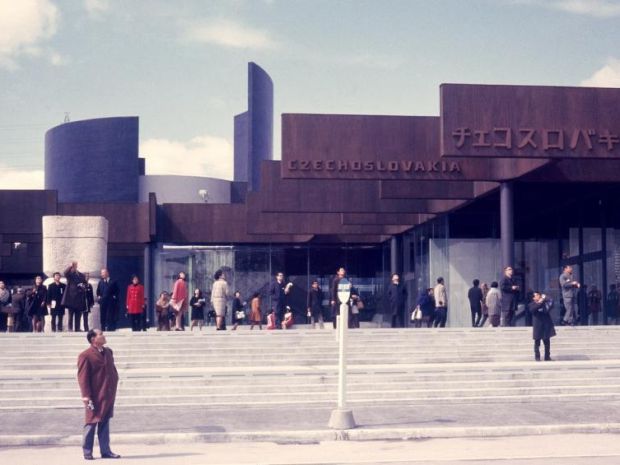
Expo has always been one of the crown jewels of Czechoslovakian architecture, be it in Brussels or Montreal. The same kind of affection can be given to the 1970 Expo, which took place in Japanese Osaka. Japanese and Czechoslovakian diplomatic relations have deep and long roots; two culturally very different counties always found appreciation and fascination for each other, which lasts to this day.
In the 1970 Expo, Czechoslovakia shows a slightly different approach which combines functionalism and minimalism, using transparency as a critical feature and artistic and poetic value as the other. Legendary Czech architect Viktor Rudiš called his design “monumental simplicity”, bringing open space combined with sculpture structures and poems from Jan Skácel.
NG Exhibition
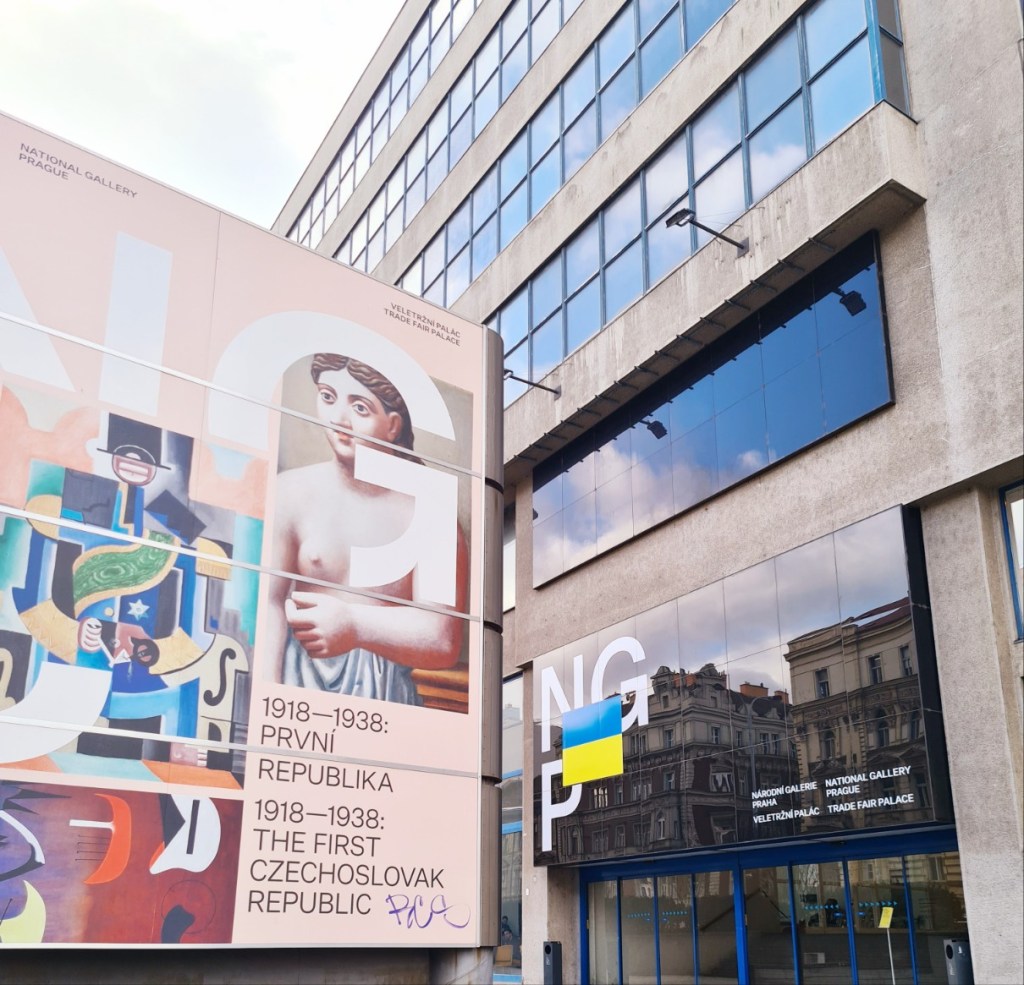
Currently, you can visit National Gallery building Veletržní Palác, which has a deeply rooted functional history. Built in the 1920s and partially destroyed by fire, the building is now used by the Prague National gallery hosting an exhibition looking back at Czechoslovakian architecture (but also many other exhibitions, including famous slef-portraits where you can see Picasso or Van Gogh paintings). The building itself though has big significance to this particular exhibition.
Several models accompany the exhibition alongise television clips of historical tapes that take you back to the times of communism, viewed through pink glasses on the screens but in grey concrete brutality and simplicity in real life.
Sadly, when I visited the exhibition, most TVs were off, so I only really got a part of that experience. Perhaps that’s why I mostly felt the irony of greatness locked inside an unjust, cruel and oppressive regime, knowing the people here could do more extraordinary things in a free world than the great things they accomplished behind the curtain.
There is a wave of fascination, particularly in the United States, of the “soviet-era” architecture, the eerie vibe of our rural areas and the many ghosts of the past which often stand in the middle of gothic Prague, either abandoned or refashioned. It’s an interesting phenomenon, one that does not necessarily understand the pain behind them and the individual futures either cut short or deeply limited. Still, it’s also one I can understand. It’s a vibe like none other. But not one that this particular exhibition delivers, concentrating more on the technical and a little bit of politics. I recommend this exhibition for both history geeks and the architecture lovers.
You can visit the exhibition at Veletržní Palác whenever you are in Prague the newly introduced exhibition at the 2nd floor is to become the new permanent exhibition.


Leave a Reply